

The problem
Glu's Tap Sports Baseball franchise had passed 40 million downloads and $250 million in lifetime bookings. Tap Sports Fishing was the bet that the same formula (approachable controls, collection and upgrade loops, competitive events) could carry a new sport. The pitch was the most realistic fishing experience on mobile: 3D environments, hundreds of species, sonar and attractant mechanics, lure collection and upgrades, unlockable locations around the world, real-time PvP, and tournaments.
I joined in December 2020, coming directly off the Madden play call work at EA Tiburon, and owned the front-end UI experience and UX for the game through its soft launch. Four months later, EA acquired Glu, which put me back inside the company I had just left.
Fishing is a slow sport. Tap Sports is a fast brand. The core tension in the product was making patience feel like gameplay: a cast, a wait, a strike, and a fight had to read as a satisfying loop in a genre where players expect to tap something every second.
Around that loop sat a full mid-core meta. Gear and lure collection, upgrade paths, a world map of locations with their own species, PvP matchmaking, tournament schedules, and a live-ops economy. The UI had to hold all of it without turning a relaxing fantasy into a spreadsheet.
And the game was in soft launch, which meant every screen existed to answer a question: does this loop retain, does this economy convert, does this flow onboard. Design work was measured against those questions, not against taste.
The constraints
The research
Soft launch gave us real players in real territories. Glu was running player surveys and KPI tracking on the title, and the UX work responded to what that data said about onboarding, session flow, and where players dropped.
How it evolved
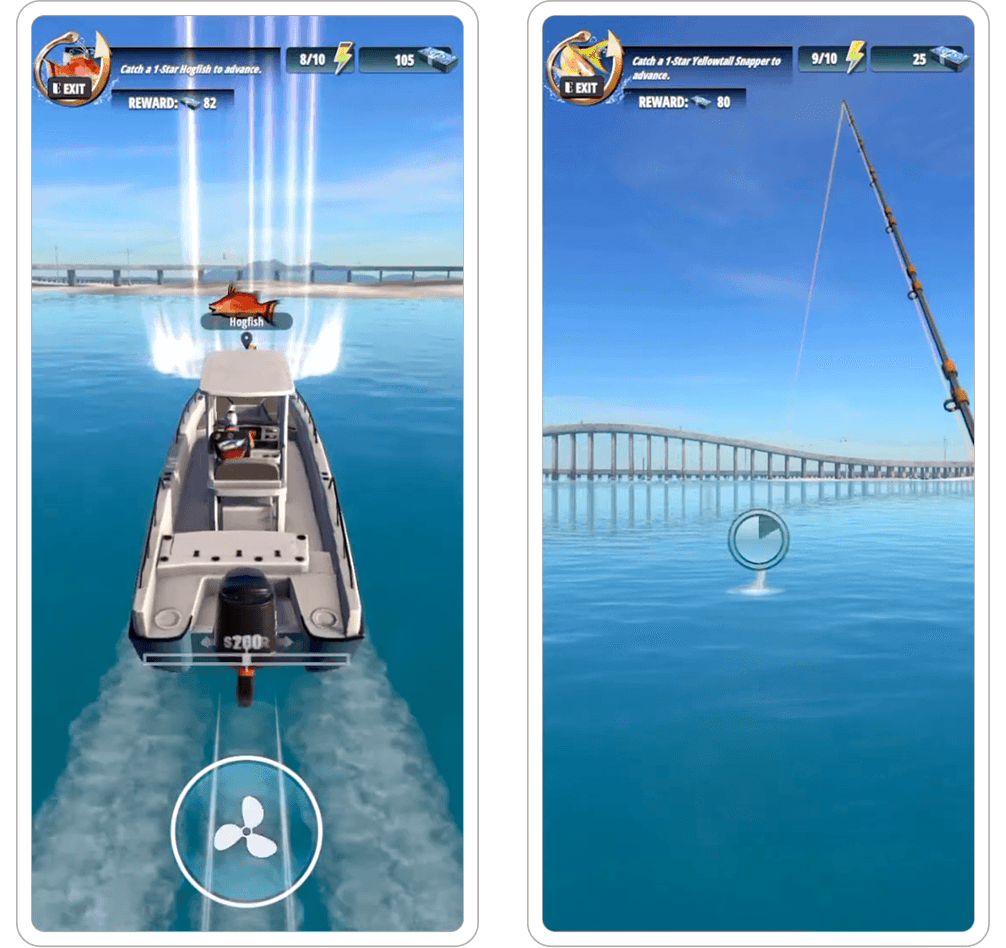
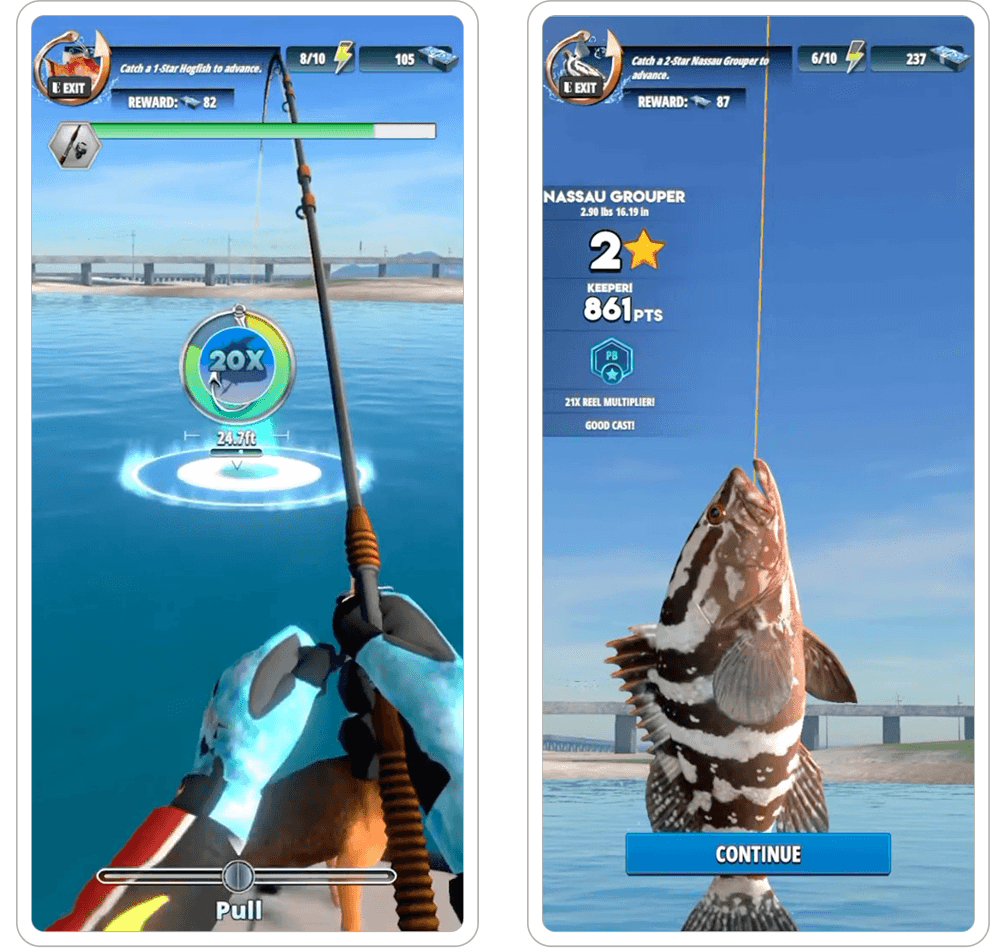
What I did
Another Senior Experience Designer and I split the interface players touched: the HUD during the catch, the lobby and world map, gear and upgrade flows, PvP and tournament entry, onboarding, and the economy surfaces a free-to-play game lives on. I also built and maintained the design system those screens shared, with one artist supporting the front-end.
A tiger team that size has no UI team. It had two of us. We worked directly with the producer, product, engineers, and the overseas studio. I moved between wireframes, production art, and implementation review as the build needed, including assisting with screen implementation directly in Unity.
The team was designing and shipping while EA acquired Glu, while Apple's iOS 14.5 rewrote the rules of mobile advertising, and while the game's future depended on numbers none of us fully controlled.
- Decision 1 of 4Designed user flows and high-fidelity mockups for Tap Sports Fishing, with one artist supporting the front-end
- Decision 2 of 4Built and maintained the design system as features came in, with that artist's support
- Decision 3 of 4Assisted with implementing screens directly in Unity, so my designs were checked in the engine and not only in mockups
- Decision 4 of 4Ran remote playtest sessions with the UXR team through soft launch, revising the UI between rounds
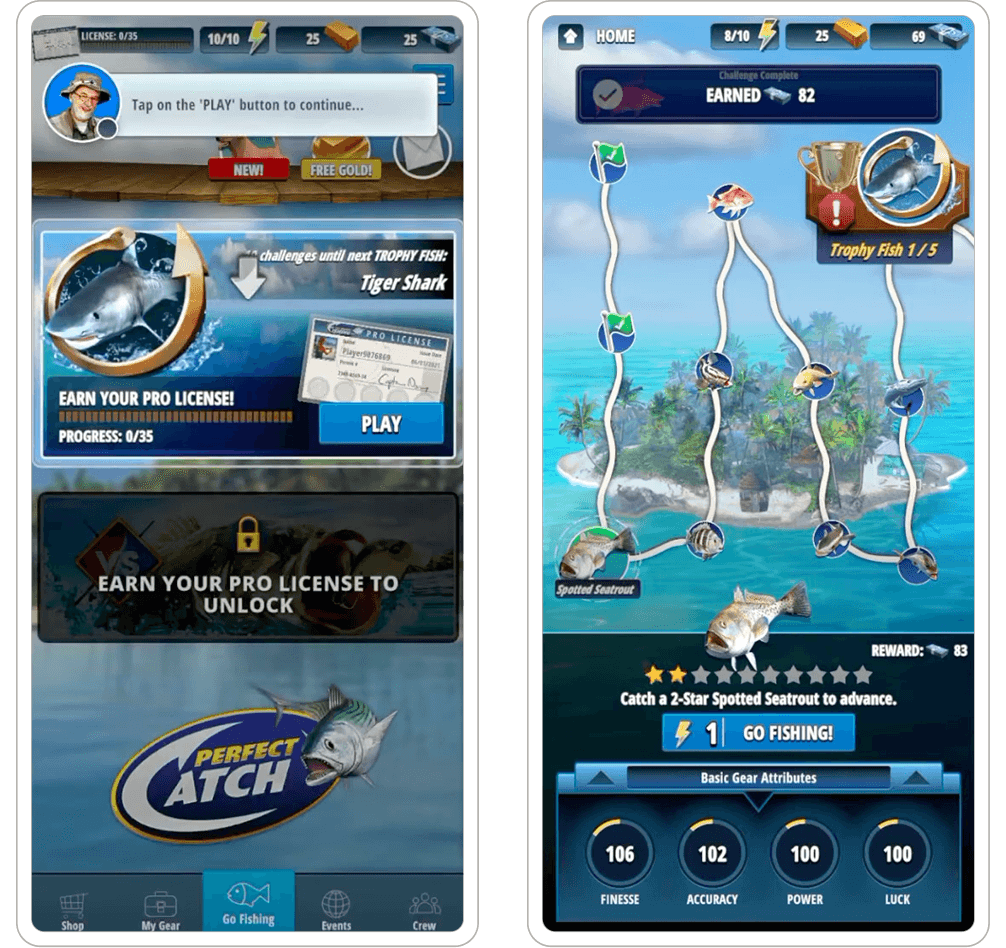
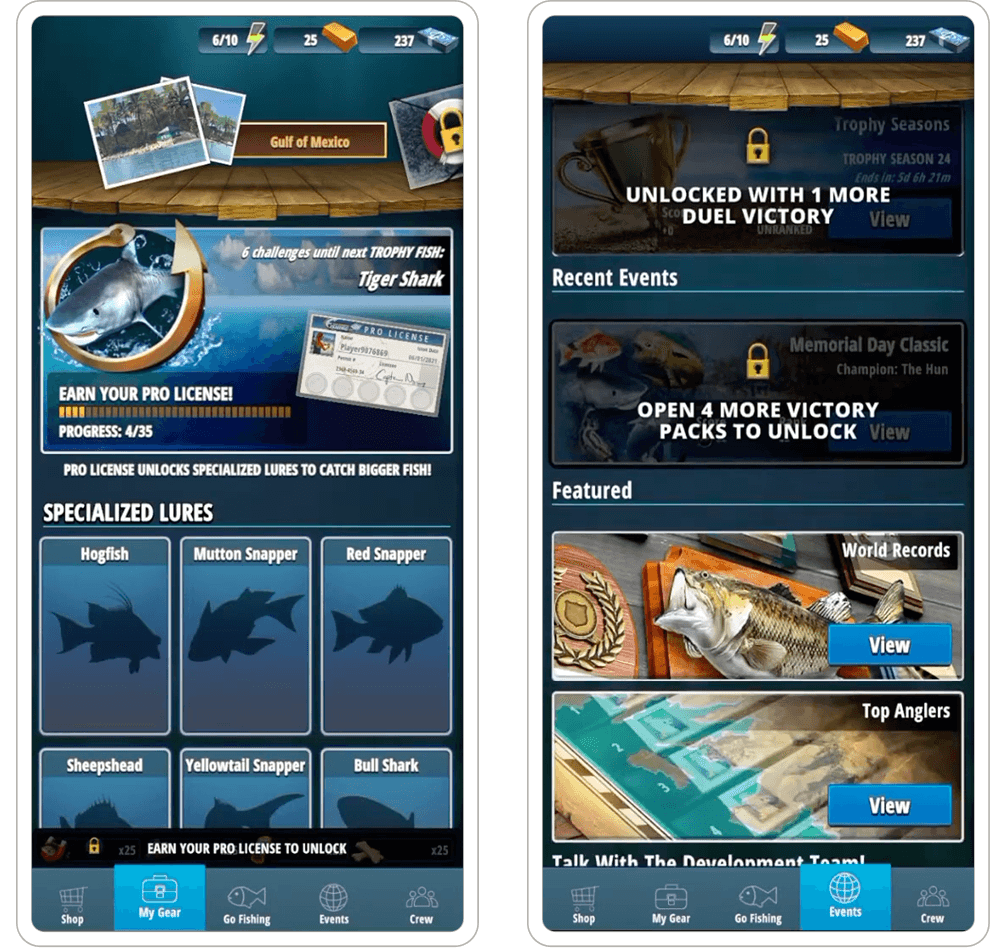
The outcome
At a glance
- 7
- Core Player Journeys
- 30+
- Screens & States
- 15
- Reusable Interface Patterns
- 1
- Cohesive Loop
In April 2021, Apple shipped iOS 14.5 with App Tracking Transparency, which required users to opt in before apps could access the IDFA identifier. Most did not. For mobile publishers whose growth model depended on targeted user acquisition, the cost to acquire a quality player went up sharply almost overnight.
Tap Sports Fishing was in soft launch when that happened. The game's economics were being judged on CPI and early retention at exactly the moment CPI became more expensive and harder to measure. A title that might have cleared the bar in 2019 was being evaluated under 2021 conditions.
Glu had listed Tap Sports Fishing among four new titles planned for global launch in 2021. It never got there. The game was discontinued on January 31, 2022, with Glu thanking its "small but dedicated community."
What it taught me
- 01Good design cannot fix a broken acquisition model. The interface can improve retention and conversion at the margin. It cannot make a player who costs too much to acquire cost less. Knowing the difference is part of the job.
- 02Soft launch is a research method. Every screen was a hypothesis with a metric attached. That discipline, designing to be measured, is one I carry into every product now.
- 03Ship the game you can ship with the team you have. Ten people and an overseas partner built a full 3D sports sim with PvP and live ops. Scope discipline was the whole game.
- 04A sunset is not a failure of craft. The work was real, the players who stayed were dedicated, and the reason it ended was structural. I would rather explain that clearly than pretend everything I touched shipped to a hundred million people.